Grief comes in waves, but it lasts forever. It changes, but it’s still there. Mom died in June 2022, but for the past few months, I’ve missed her more than ever.
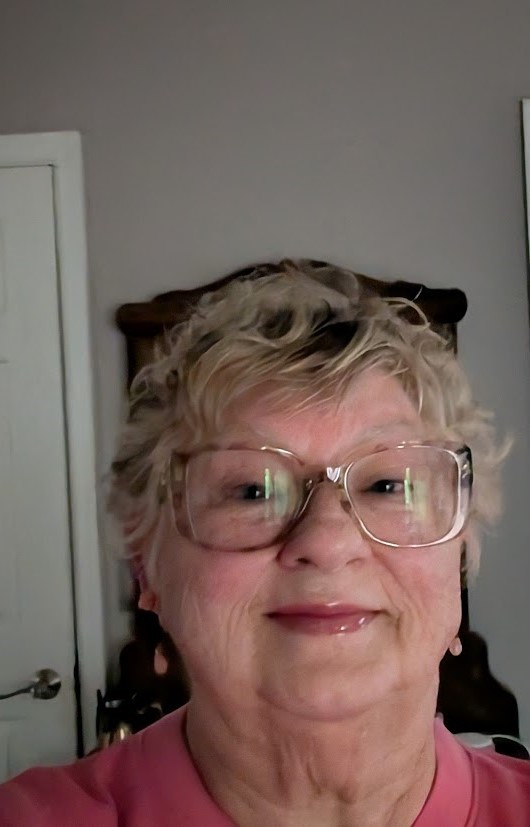
Some people say I look like Mom. Sometimes, when I’m dressing, I catch just a glimpse of that. In her later years, Mom got a perm every four months. Shortly before she died, my hair began to curl. At first, I blamed the anesthesia I got when I had my shoulder replaced in the spring of that year, but it kept getting curlier. Now, it seems to kink more by the day. It takes on a look that resembles my mom’s just after I’d arranged it before she began her day.
Without my ash-blonde highlights, my hair would look like Mom’s — almost white in the front, with a sprinkling of silver through the rest. I’m afraid to let it go because I’d scare myself every time I passed a mirror.
I’ve started blowing my hair straight.
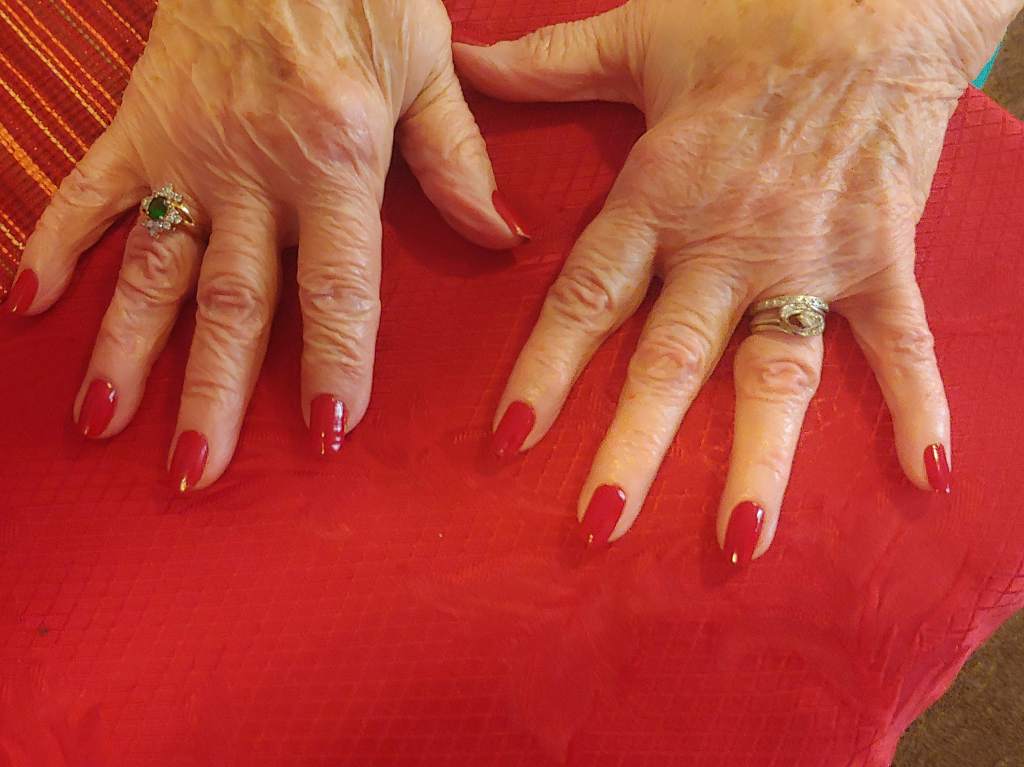
I’ve gone to my jewelry armoire and taken out pieces that meant something to Mom. I have my great-great-grandmother’s wedding band, a tiny little yellow gold band with inset diamond chips, two of them missing, and Mom’s original engagement ring and band. My oldest great-niece wears her upgraded set from the 70’s. Mom’s eternity band fits my right hand. I wear it sometimes. I hold her gold bracelets in my hand to warm them. I can’t wear them until the clasps are repaired.
Most of Mom’s never-ending collection of costume jewelry was sold in the estate sale after I removed a few pieces and sets that I remembered from childhood, things that she continued to wear until her passing. A blue and light blue rhinestone brooch and earrings set, another with settings of various hues of gold, and her Christmas brooches are safely tucked away.
I have some of her dreamcatchers in the kitchen window, and I’m thinking about hanging the rest of them. She strung them in the apartment windows and on the arms of her Rollator, Dolly.
I often shower with Mom’s favorite fragrance, Pure Grace by Philosophy, which our dear friend Neil gave her for Christmas in 2019. Sometimes, I spritz with the half-bottle left of her Pure Grace body spray.
She dressed in coordinating pants and feminine tops, and when there was a special event, she made a spectacular new dress. She chose jewelry to match the outfit, whether she was dressed for a day at home or a special event. She looked terrific in royal blue. I’ve been wearing blue a lot lately.
I told my nail technician how Mom’s nails were so beautiful and that she even did them herself until her last year or so.
Then we discussed how the older ladies knew how to dress, apply makeup, and accessorize themselves with jewelry, even when they were only getting their toes done. I told her how Mom would get up every morning, do her hair and makeup, choosing which red lipstick to wear that day. She was never without red lipstick. Oh, she tried deep coral and fuschia and all shades in between, but Revlon Red was her standard.
Mom had the most magnificent walking stick that she used before she had her knee surgery. I can’t remember where she got it, but I do remember that she told me. It was handmade by some man in Gainesville, I think, or maybe it was Cookeville. I don’t know where that treasure is, but I think of Mom every time I grab some sort of stick to walk the rock path downhill to my fish pond.
I think of Mom every time I see trout on a restaurant menu. She always ordered fish. I try to cook green beans like Mom’s, but they don’t taste the same. Mom made a banana cake every year for Christmas. She even baked one for my son Jade’s birthday. I’ve made banana cake, but not like Mom’s, using a recipe from my dad’s mother, Effie Blair. Mom’s actually tasted like Mammy Blair’s, and that was a hard thing to accomplish. I may try to bake one again.
Mama loved to sing and play the piano. She thought she and I sounded great together. I’d be the soprano, and she the alto. After years of asthma and inhalers, I am now the alto. I have never parted with a music box my mom bought for me, so I have an extensive collection. The one I wind most often is the one that plays Wind Beneath My Wings.
Mom was always so proud of me. If I sang at an event, she was there to quietly cheer me on. I played the lead, Sgt. Sarah Brown, in our high school’s production of Guys and Dolls. Mom and Dad had moved to Billings, Montana, to shepherd an old Baptist Church there. I tried to talk Mom and Dad into coming for the production, but they said they could only afford to go once and that they intended to be there for graduation. I wish I had insisted they come for Guys and Dolls.
I did so many things that Mom didn’t get a chance to do. She married at fourteen (almost fifteen) and gave birth to my brother Denny a year later at fifteen (nearly sixteen). She was eighteen when I was born. Her whole life was given freely to support Dad, facilitate his goals, and encourage him. She was somewhat militant in her role, especially as a pastor’s wife. She was never sorry for her early start, but she told me once she missed having girlfriends like I did.
Mom’s best girlfriend after she and Dad moved back to Tennessee was my Aunt Bessie, Dad’s youngest sister, nine years Mom’s junior. They talked every Saturday morning, sometimes for hours. My Aunt Bessie started to decline in the months after Mom was gone and died soon after. Things just weren’t the same.
We laughed a lot.Mom and Bessie
She did not neglect her education. She had graduated from 8th grade at thirteen, and when Mom and Dad married, she taught him to read. When he attended high school at Harrison-Chilhowee, she helped him with his homework. She studied and passed her GED exam. She studied alongside him at Tennessee Tech, Cumberland, and Belmont colleges. Meanwhile, she enrolled in night business classes, taking Denny or me with her, whichever one was available. Her first office job was at an insurance company in San Francisco. She commuted across the Golden Gate Bridge from Mill Valley, where we first lived, and later worked in several Sears locations in the West.
And when Denny and I were both out of the house, she owned her own business.
She was always an avid reader and kept up with news and current issues. I loaded up her Kindle with romances and literary novels. And God love her, she kept a diary.
I believe I was Mom’s best friend. I think she loved me more than she loved herself. But I never had a one-on-one relationship with her until my father died. She became my most vocal supporter, my most learned elder, and a girlfriend who loved to go on drives to pick up items I’d bought on Marketplace. Oh, the places we would go!
And the laughter. Every day, we found something to cause us to bend over, wipe joyful tears, or pee. Mom wore Depends, but there were times I didn’t make it to the bathroom.
I don’t wear red and don’t want to look like Mom. In personality, I have never been like Mom; I have always been much more like my daddy. Maybe it took us a while to bond one-on-one. And now I’m somehow empty without her next door.
Maybe you miss your mama, too.
***
Years ago, I was the assisting minister on Mother’s Day and wrote this prayer.
Father, we praise you on this special observance of Mother’s Day. We thank you for showing us your creative, nurturing, loving side, which we naturally associate with motherhood. We are reminded that while you do seem to bless our mothers abundantly with those special gifts, you offer those same gifts to all as we learn to live by your example.
We give you thanks for our mothers, and we know that the unconditional love they give us could only come from you. We ask your special watch over those soon-to-be mothers, and we beg your healing and comfort for those who struggle to conceive. We invite your wisdom and reconciliation for those who find themselves with children and aren’t truly ready to be mothers; in your wisdom, bring them to a true soul-blessing through whatever path you design. We are grateful for adopting mothers. We thank you for “stand-in” mothers, the ones who are just like mothers to us. We pray for your guidance for mothers in difficult situations, and we ask for consolation for those who have lost their mothers, whether through death or separation.
I am “the other” in the State of Tennessee. It hurts.
We were poor growing up. My mom always said we didn’t know we were inadequate and that we had fun anyway, and we did, but I felt it every time a school event required the purchase of equipment or special clothing.
In preparation for a school festival that involved every sixth grader rounding the auditorium in couples to dance to folk music, the girls were all told to wear a gathered (dirndl) skirt and white tennis shoes. I had it made for the gathered skirt. I had a closetful. But I didn’t have white tennis shoes, and I knew my mother would not go out of her way to get some for me. We just couldn’t afford them.
On a Saturday, when I walked downtown, I saw a big bin of white tennis shoes at Kuhn’s Dime Store. I knew they were women’s sizes, but I was sure I could dig through them enough to find a pair that almost fit. The shoes cost $1.00. When I got home, I asked Mom for a dollar. I told her I needed it for school. She didn’t say much; she just took a dollar from her beige clutch purse and handed it to me. I would take that dollar to Kuhn’s the following Saturday and get my shoes.
When I got to the square and hurried into the store, I noticed the bin was almost empty. There were no size fives or sixes. I found a size seven, and fortunately, the sales lady told me she would pay the tax from her pocket.
My outfit was complete, but Donna’s was not. Donna was a mousy little girl with glasses who never said two words aloud. When the teacher asked the girls to raise their hands if they didn’t have a dirndl skirt, Donna raised her hand halfway. Mrs. Robinson then wondered if someone could loan Donna a skirt for the show. No one volunteered, so I raised my hand and said I would bring it the next day.
I have never comprehended why Mom would have made me a solid brown cotton skirt, and I hated it. I asked Mom if it was okay if Donna kept it. I laid it out on my bed to remember to put it in a grocery sack to take the next day.
Dad glanced into the bedroom I shared with my brother and said, “Is that the skirt you’re taking to the girl at school?”
“Yes,” I said, “And I’m letting her keep it.”
“Isn’t that the skirt you’ve always disliked?” he asked.
“Yes. I’m glad to get rid of it.”
“Didn’t your teacher say you all should wear colorful skirts? Maybe you should consider giving Donna a prettier skirt she would love wearing after the show.”
I was ashamed. I knew what Dad was saying. When he left the room, I folded the brown skirt and put it in a drawer. My gathered skirts were in the small closet, hung by wooden clothespins and wire hangers wired together to hold more than one skirt.
I took down a red floral, folded it, and put it in a brown grocery bag. When I gave it to Donna the next day, I told her she could keep the skirt. All she whispered was, “Really?”
“Yes,” I answered. “I have plenty.”
My teacher had paired me with Steven Cantrell, a slight boy who seemed to weave when he walked and had a bit of trouble speaking. At times, his hands flopped around. Needless to say, he was not the most popular kid in the class. We didn’t talk much when practicing, but I was not shy about pulling his right hand over my right shoulder, grabbing his left hand, waving around in the air, and clasping it to meet the dance form. I could still feel the motion of his left hand, even when I held it tighter.
On the morning of the festival, I chose a blue flowered skirt and a white blouse with puffed sleeves and pearl buttons, both homemade by my mother. I pulled on two pairs of bobby socks and tied the three-sizes-too-large tennies as tightly as possible. The toes still had plenty of room, so my feet slid around a bit. I took my new shoes off and stuffed the toes with newspaper. Maybe this will do it, I thought.
My teacher told us how proud she was of our class in our colorful skirts and shirts. She said we had practiced the dance, so we knew it well, and our program would be great. We lined up for the auditorium, girl-boy, girl-boy.
I loved singing all the songs the music teacher chose for that particular day, but I couldn’t tell you now what we sang. But I could do that dance by heart today. “Put your little foot, put your little foot, put your little foot right down. To the left, step and turn. To the right, step and turn. To the front, step and turn. See how quickly we learn.”
Stephen caught up with me after the festival, and we walked back to the classroom for celebratory cookies and punch. He pointed his left hand to my feet and said, “Your feet aren’t really that big, are they?”
*
It hurt when my piano teacher, Mrs. Gwendolyn Gwaltney, kicked me out of her studio for telling her that John F. Kennedy was just as good as she was. I had to. She had just said that nobody in their right mind would vote for a Catholic for president. Indeed, my family was different in our corner of Lebanon, Tennessee, but we were not crazy. We supported JFK. I had to represent!
My dad got in trouble at Belmont College the week after the piano incident. He was in a music appreciation class taught by Dr. Helen Midkiff, a professional and well-recognized organist. She started the class by saying she did not think JFK had enough grey matter to be president. Dad’s friends and colleagues on both sides of him knew what was about to happen. They both pulled on Dad’s jacket and coat sleeves and shook heads. He stood up, lifted his briefcase from the floor, and said, “Dr. Midkiff, when you are ready to teach music, I’ll be back.”
Dad was called to the President’s office (the President of Belmont), where Dr. Gabhart told him his lack of respect might cause his expulsion. Dad acknowledged Dr. Gabhart’s statement, saying, “If I have to go, I’ll go.”
I’m unsure of the rest of the conversation, but Dad did not get expelled. He told me he visited Dr. Midkiff and apologized if she felt disrespected. It was one of those times he didn’t admit he was wrong. He suggested I call Mrs. Gwaltney and do the same. I went back to piano lessons that week.
*
After Dad graduated from Belmont College in June 1960, we would move across the country so that Dad could attend Golden Gate Baptist Theological Seminary. We made a four-day cross-country trip in our ’57 white Plymouth Belvedere to Mill Valley, California, pulling a small U-haul. Our Route 66 journey was educational and fun. We had no air conditioning, just this funny fan that fit in a window and blew air over a pan of water. Every time we stopped for gasoline, we refilled the water container. Wisely, we crossed the desert at night. It was the Summer of 1960.
We unloaded the few pieces of furniture and clothes we brought to the seminary’s married student housing. My brother Denny enrolled at Tamalpais High School, and I registered at Mill Valley Junior High.
I didn’t know what to think of teachers and students. I was an alien on an alternate planet. The school was new, but it had no cafeteria and no auditorium. We ate lunch that we brought from home in a courtyard on picnic tables or, if it rained, on our desks in our homeroom classroom. Every group activity took place in the courtyard. It appeared to me that all the students were white. There were few chances to really make friends.
One girl was kind to me. I don’t remember her name, but I remember she was in love with Cherry Vanilla lipstick. It was a Revlon shade discontinued decades ago. Today, I see a Cherry Vanilla from Lawless on the internet. There are even photos of Taylor-approved reds; one is Revlon’s Cherries in the Snow.
I’ll call her Cherry since I can’t remember her name. Cherry gave me a taste of her orange creamsicle that she bought from a small trailer in the courtyard. (Now we call those little stands kiosks.) My accent did not put her off. I’d never known anyone to talk about an accent until we moved to California. If you had a Southern accent, you were an Okie, a slur to name those who migrated to California during the Dust Bowl.
The music teacher chose me to sing a high soprano solo at the Christmas Choral Presentation, so named because we didn’t have an auditorium. The janitors helped the choir director roll a piano to each hall for our Christmas concert, and we sang our program while the other students listened from their classrooms.
I remember a section of that song I sang. No Candle Is There and No Fire.
…But the moon gave a radiance divine, and the stars an effulgence bright. And the only sound to be heard was the lowing of kine in the night. Then, the blowing of wind through the trees and the flapping of angels’ wings.
After the first two hall concerts, a girl several rows over in my homeroom stood and announced to the whole room, “Your accent really showed.”
A boy in front of me turned around in his seat and said, “I thought it was beautiful.” He had black curly hair and wore a red and black striped shirt.
The girl who shamed me continued to be a problem. She said, “That white stuff on your crackers is slimy. Is that what Okies eat all the time?” She referred to my cherished saltines, peanut butter, and marshmallow fluff sandwiches.
And later, “All your clothes look alike. I guess your mother makes them all from one pattern, huh?” Californians ended a lot of sentences with huh, but it didn’t turn the sentence into a question. It was more of a statement.
Most of the time, I just ignored her. But one time, she went too far. While we were waiting for the bus, I realized my sanitary pad might not make it all the way home. I told a bus rider, “Don’t let it leave without me. I’m going to the restroom.”
Bully Girl asked from two tables away, “Are you on your period or something?”
I told her no and hurried into the restroom stall. I quickly exchanged the pad with one in my book bag. I heard a noise and looked up. I saw the girl’s face as she was jumping down from the toilet in the next compartment.
When I finished and ran to the courtyard to my assigned bus table, she stood on one of the benches and said, “Yeah, she is.” Then she skipped across the courtyard and propped herself on her elbows in front of my face.
“You’re not feeling so perky, are you?” she asked. “Something is slowing you down, right? It’s that time of month, huh?”
I looked her in the eyes and said, loud enough for all to hear, “There is something seriously wrong with you. You need a psychiatrist.”
And that was the end of our relationship. It occurred to me that she was already getting help for some mental condition. I did not feel bad for her, but I didn’t feel exactly right.
I was lonely in Mill Valley. Every night, I listened to the fog horns in the Bay and felt lonelier. Sometimes, I sang Stranger On the Shore to myself.
Here I stand, watching the tides go out. So all alone and blue, just dreaming dreams of you...Why, oh, why, must I go on like this? Shall I just be a lonely Stranger On the Shore?
In November, my dad got a call from Temple Baptist Church in Pittsburg, California. We would move there during Christmas break, and I would attend Hillview Junior High starting the first day after break. At the time, Pittsburg was an industrial place named for Pittsburgh, PA, because the two cities shared steel and mining industries. The population at the time was about 20,000. Dad said he thought I would like Pittsburg. He said there were people of all colors in Pittsburg, a true melting pot, he called it.
In early December, I asked my Mill Valley math teacher to give me any quizzes or homework she had graded so I could take them to a new school. The first words out of her mouth were, “Oh, yeah, you’re the seminary kid. You know, we don’t like the seminary kids. They’re always leaving for points unknown.”
She handed me a folder of my work, and I said, “Thank you, Mrs. (Whoever),” and left.
My first class at Hillview was physical education, or “gym,” as most students said. We lined up in alphabetical order, sitting on the floor. The teacher passed out locker assignments on small pieces of paper. We were to find them, put our street clothes in them, and return to the lineup in our required gym suits.
When I opened my locker, I found someone else’s (from another class) clothes carefully folded inside. I went to the restroom, changed into my gym clothes, and returned to the lineup, leaving my first-day school outfit on a bench in the locker room.
When the teacher called our names, we were to give our locker numbers so she could put them in a chart in her roll call book.
“Well,” I answered when she called Diana Blair, “it’s 36, but my locker has done been possessed.”
I don’t know why I answered that, but the teacher and the whole class laughed.
“Diana, you’ve hit on something I’ve never heard,” she said, laughing some more. “We’ll get you another locker.”
From all the laughter, including the teacher’s, I knew I’d be okay in this new environment. These people were not put off. They were entertained. I laughed with them, feeling joy in the seventh grade for the first time.
I noticed there were few African Americans at Hillview. There were Asians, Filipinos, Hispanics who identified as Mexican, and many Italians. Someone told me the black students were at Central Junior High. Still segregated.
During roll call every day in gym, we answered “X” if we were menstruating so that no shower was required. No one cared. It was nothing to be ashamed of.
I met Dorothy Valenzuela, and we became fast friends. Dorothy taught me Filipino cooking. On my first day in gym class, I met Jean Snyder, my lifelong friend. I call her Ja, pronounced like Jay. We were Ja and Dee, or Dee and Ja. Sometime during the sixty-two years since, she became my sister, not just a friend. She still is.
I joined the choir, played with the jazz band, and sang with Jeannette Bartimioli in the talent show.
Don’t they know It’s the end of the world? It ended when I lost your love.
*
Hillview offered a summer school session during which we could take elective classes or make up for class failures. I learned to type and studied art. A ninth grader in art class called me an Okie. He taunted me, “What’s your favorite song, Wolverton Mountain?”
I said, “No,” feeling no great need to tell him my choice. I knew he was making fun of me, but I didn’t see why Wolverton Mountain should be such a bad thing.
When I arrived home, my dad was there. He stirred his instant coffee while I sipped red Kool-aid. I didn’t even bother to tell him about that Italian guy calling me an Okie. I just asked Dad to sing the song to me.
He picked up his guitar from the couch and said, “Okay, now, harmonize with me, Sis, on the chorus.”
They say don’t go on Wolverton Mountain If you’re looking for a wife ‘Cause Clifton Clowers has a pretty young daughter. He’s mighty handy with a gun and a knife.
Her tender lips are sweeter than honey And Wolverton Mountain protects her there. The bears and the birds tell Clifton Clowers If a stranger should enter there.
All of my dreams are on Wolverton Mountain. I want his daughter for my wife. I’ll take my chances and climb that mountain Though Clifton Clowers, he might take my life.
Her tender lips are sweeter than honey And Wolverton Mountain protects her there. The bears and the birds tell Clifton Clowers If a stranger should wander there.
I’m going up on Wolverton Mountain. It’s too lonesome down here below. It’s just not right to hide his daughter From the one who loves her so.
Her tender lips are sweeter than honey, And Wolverton Mountain protects her there. The bears and the birds tell Clifton Clowers If a stranger should wander there.
But I don’t care about Clifton Clowers. I’m gonna climb up on his mountain. I’m gonna take the girl I love. I don’t care about Clifton Clowers. I’m gonna climb up on his mountain. And I’ll get the one I love.
I still didn’t see anything off about Wolverton Mountain. It was a good story in a song. But I suspected the bully guy might not be a country music fan. At the least, he was ignorant about the South—and me. I wondered how he even knew about Wolverton Mountain.
*
Pittsburg High School was the genuine Melting Pot. The multitude of tones enthralled me, and I couldn’t help but stare. I also noticed that race, ethnicity, and color mattered.
Students from three schools fed PHS: St. Peter Martyr (almost exclusively Italians and Mexicans), Central Jr. High (where most Black kids attended), and Hillview (primarily white, some Filipinos and Mexicans, few Blacks).
I had all these different classmates, but kids of differing ethnicities usually found others of the same to hang with. My coloring was a bit rare: very white, blonde (helped along by Nice’N’Easy), and blue eyes. More than once, a classmate would stop me in the hall and ask if they could look at my eyes, even more so when I got blue contact lenses. My main categorization, though, was one of the Smart Kids.
I felt like the other, being so white and Smart, but I saw clearly that others were more other than me. For all of the Civil Rights Movement and living in the progressive State of California, we were still divided by race and origin.
My few Filipino and African American friendships were formative; we are still in touch. They probably don’t know how much they taught me then and how much they teach me now.
Race and origin never seemed more important to me than the race for Miss Pirateer, PHS’s version of Homecoming Queen. Clubs nominated girls, and the student body voted for several on one ticket. I’ll never forget my friend Ernie, who told me why I would not get a spot on the Miss Pirateer Court. He said, “Diana, you don’t have a big group behind you. You’re popular, but not real popular. You’re one of the smart ones, and they don’t have that many people in their group.”
Many years later, my choir teacher, Jack French, asked me to accompany him to a class reunion. I graduated in ’67 and was in town for our reunion, but he had been invited to the Class of 65’s event. We had a splendid time. He was eighty years old and enjoyed telling our tablemates and anyone who would listen that I was his all-time favorite student.
I told him about my favorite student in our choir. Her name was Jacqueline Griffin. She was gorgeous, black as the night, with a huge bosom that produced a low alto voice like I’d never encountered—and I still haven’t. She would open her mouth, and her message shook that choir room and boomed in the multi-purpose room. Sometimes, I wanted to stop singing to listen to Jackie. I asked him if he remembered Jackie. He did. We wondered together where she was and what she was doing.
We danced a little and reminisced about all the good singers at Pittsburg High School and the spectacular performance of the musical Guys and Dolls.
I asked him if Jackie had a part in Guys and Dolls. Neither of us could remember. It was a massive production with two sets of dancers, one dancing in NYC and the other in Havana. It seemed to me at the time that everybody at PHS was in Guys and Dolls. Thinking back, there were no Black speaking parts, but all the Havana dancers were people of color. All of the Hotbox Dolls in NYC were white. The yearbook supplement only gave two scant pages to the musical, and the participants are not listed, so it’s almost impossible to reassemble a cast.
My mind drifted back to our first musical in my junior year. The show’s name, which was written for youth, was Through the Hedge. It was about a boys’ school separated from a girls’ school by a hedge. The lead girl part was a student who sang, “Everybody goes through the hedge but me, and I know what they’re going through the hedge to see. Someday I’m gonna (do something or the other) and go through, too, And then I’ll have some fun just like the others do.”
I knew I’d get the lead of the girl student because no one else wanted it! However, there was an African American girl whose name I can’t remember who auditioned for the part of a teacher in love with another teacher at the boys’ school. Her name might have been Mary. I remember she was timid and had dark red hair. The song she had to sing was the teacher’s solo in the play. I don’t know why we had to sit to audition, but she took her wooden seat, held the sheet music in her hands, and began a slow, rich, soulful rendition, similar to Etta James. Her voice smacked me almost as much as Jackie’s.
“Now we’re together, together at last. Let’s live for each moment, forgetting the past.”
Mr. French stopped her and asked, with something of a smirk, “Now, do you really think she would sing this song that way?”
Mary nodded quietly and smoothed her skirt.
Mr. French said, “Thank you for auditioning.”
She walked into the wings of the stage.
I still see her face and feel the pit in my stomach that I felt then. I thought, “If she got the part, that teacher would sing that song that way.” I didn’t share my feelings. What a choice that would have been in 1966. I wish I could find her in the yearbook.
A regional newspaper posted a favorable review after the 1967 Guys and Dolls show. Whoever wrote that piece was astonished that a high school could turn out such an excellent production. I have a copy somewhere. It’s a shame we don’t have a better history of our showing of Guys and Dolls.
That night at the reunion, between dances and strolling around the room, Jack French told me he had demanded a recount for the 1967 Miss Pirateer Court. I had been sixth in the voting, and there were five on the Court. I told him my Ernie story. We laughed until we cried, but no one else at the table understood it. The Miss Pirateer in 1967 was a beautiful girl named Beryl Holmes, one of two African Americans on the court. The remaining three were Italian.
*
I am among the others today, especially in the South, but my minority brothers and sisters keep me going. We won’t be silent. We will continue to support each other and the many leaders who speak out. We find ourselves in good, solid company. We’re with Bishop Mariann Edgar Budde, who bravely spoke truth to power.
In the name of our God, I ask you to have mercy upon the people in our country. We’re scared now. The people who pick our crops and clean our office buildings, who labor in poultry farms and meatpacking plants, who wash the dishes after we eat in restaurants and work the night shifts in hospitals. They may not be citizens or have the proper documentation, but the vast majority of immigrants are not criminals. They pay taxes and are good neighbors. They are faithful members of our churches and mosques, synagogues, gurdwara, and temples. I ask you to have mercy, Mr. President, on those in our communities whose children fear that their parents will be taken away and that you help those who are fleeing war zones and persecution in their own lands to find compassion and welcome here.
Today, in 2025, I’m still among the others, but I see that all the different others are so much more other than I am. I pray, in my own way, for every person named in this Inaugural sermon.
I pray for all immigrants and their families who fear deportation and disruption to their lives.
I pray for my darker-skinned friends, colleagues, and neighbors. Their battle is far from over, and their struggle is mine. I’m still learning the history of Black Americans, things we did not learn in school. Black history is American history.
I’m praying for all those who lose jobs in the current administration’s purge of Federal agencies.
I didn’t watch the inauguration; I couldn’t watch the news at first, but I’m working on it. We need to be informed so that we can use our voices. We elders must support young people in their work for change.
I have decided to pray for President Trump daily. I’m going to call his name. I’ll pray for the administration and that its collective intentions and actions will serve mercy and justice. I know that such a change will require a conversion.
I’ll pray for courage for those who let their voices be heard in opposition to oppression and greed. I’ll pray for intelligent and peaceful protests.
I’ll ask my soul for enough love to go around, especially to my unlovable. We can’t hold on to hate; it’s too damaging, reckless, and unproductive. I’m going to meditate on lovingkindness.
Here’s Martin Luther King on hate:
Darkness cannot drive out darkness; only light can do that. Hate cannot drive out hate; only love can do that.
Hatred paralyzes life; love releases it. Hatred confuses life; love harmonizes it. Hatred darkens life; love illuminates it.
I have decided to stick to love…Hate is too great a burden to bear.
It hasn’t been too long since sales clerks, pharmacists, and service people began explaining things to me that need no explanation. When I checked out at my favorite thrift store on Tuesday, I forgot to ask for my Seniors’ Day discount. When I turned around on my way out and said, “Oh, wait, I’m a Senior,” the young woman said, “Oh, I already gave you the discount!” When I glanced at my receipt, there it was, the 30% discount.”
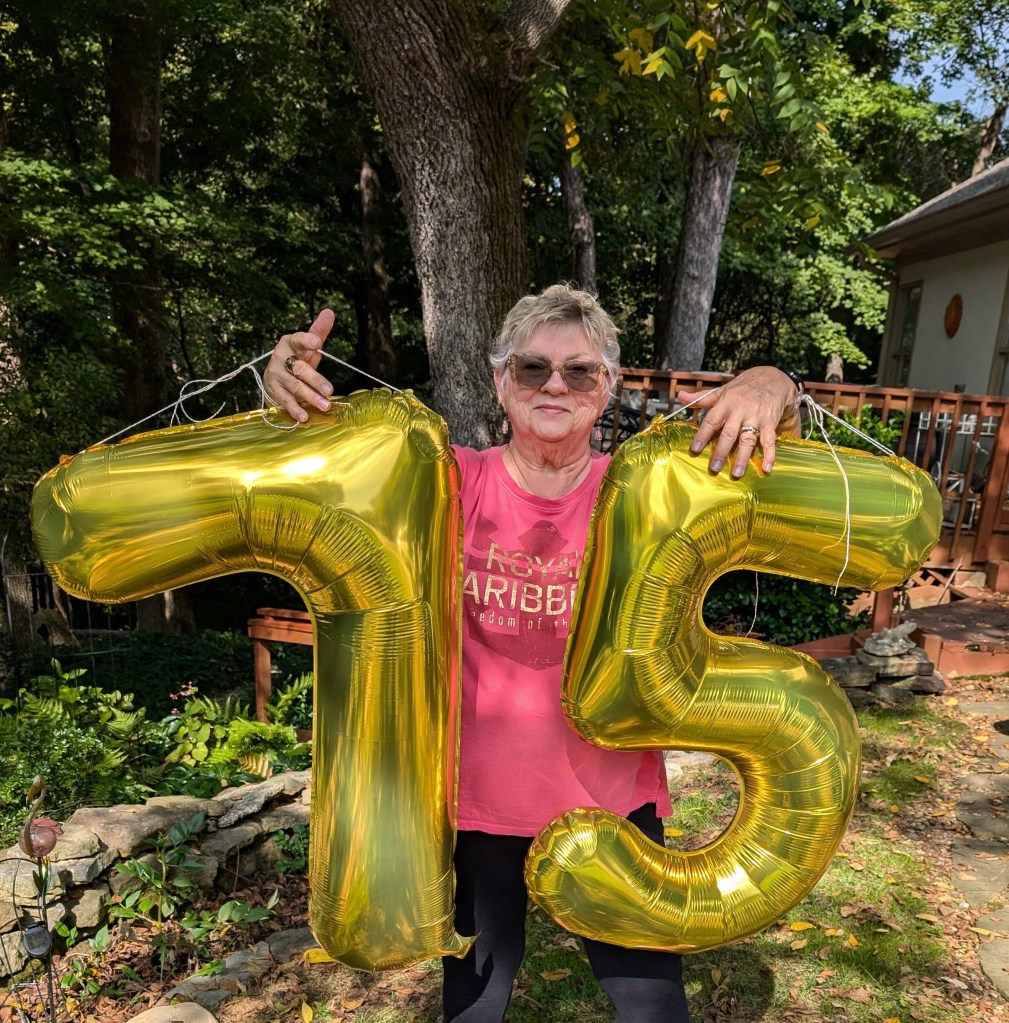
I am seventy-five years old. I’m not in love with it. I just don’t know what to do with it.
Oh, people still tell me I look younger than seventy-five, but the guy at the nail salon said he thought I looked more like sixty-five. He thinks that’s a whole lot better?
Now seventy-five, I estimate that at least three-quarters of my life is gone. If I lived to be my father’s age when he passed, I would only have fourteen years, or if I lived as long as my mother, eighteen years.
I can’t seem to get to the question I need to ask myself, “What will you do with these, [gulp], remaining years?” I get stuck on what if I only live to be 80. Then I am so sad, I cannot find any other questions.
I don’t want to leave this precious, troubled, wonderful, chaotic, green, climate-threatened, beautiful, war-torn world. I want to see change in my well-loved country: less hate, less hunger, less killing. My children and grandchildren would be fine without me, but I’m not finished looking at them, cheering them on, and loving them with this unequaled passion that began when the first infant sounds pushed from my body.
Most of the time, the questions arise when I feed my fish in the early mornings. I sit on the rock wall of the pond and gaze through a dense thicket separating our house from a busy thoroughfare. I note the birdsongs; I hear Cardinals order “Beer, beer, beer” and “Chip, chip, chip!” House finches cheep and warble a trill. Robins peek and tut before announcing, “Pretty, pretty, pretty.” Crows caw and caw louder to warn of a present hawk. Sometimes owls call to each other across the trees.
I am scared, weak, and afraid of the quick passing of time—something most people would never see in me.
I never imagined seventy-five, but the digits are mine. I don’t want to return to my twenties, or anything like that. I just want to be…for longer.
Okay, I’m ready for the question. What will I do to max out my days, months, and years? Or as Mary Oliver says, “What will [I] do with [the rest of] this wild and precious life?”
I’m working on my answers. They’re endless, so I know I must begin the tasks before I finish the list.
I plan to exhaust this endless love inside me, even though I know Love always creates more love. I’ll watch and listen until I need to sleep. Lookout, Beauty, I’m going to catch you and hold you in the Light. And Joy? I’ll choose you every day, even those when you seem far away. If I can’t reach you, I’ll make you.
Watch me, World. Slow down, and let me hug you every day.




 On the Ravine