The day after Mothers Day…

Grief comes in waves, but it lasts forever. It changes, but it’s still there. Mom died in June 2022, but for the past few months, I’ve missed her more than ever.

Some people say I look like Mom. Sometimes, when I’m dressing, I catch just a glimpse of that. In her later years, Mom got a perm every four months. Shortly before she died, my hair began to curl. At first, I blamed the anesthesia I got when I had my shoulder replaced in the spring of that year, but it kept getting curlier. Now, it seems to kink more by the day. It takes on a look that resembles my mom’s just after I’d arranged it before she began her day.

Without my ash-blonde highlights, my hair would look like Mom’s — almost white in the front, with a sprinkling of silver through the rest. I’m afraid to let it go because I’d scare myself every time I passed a mirror.

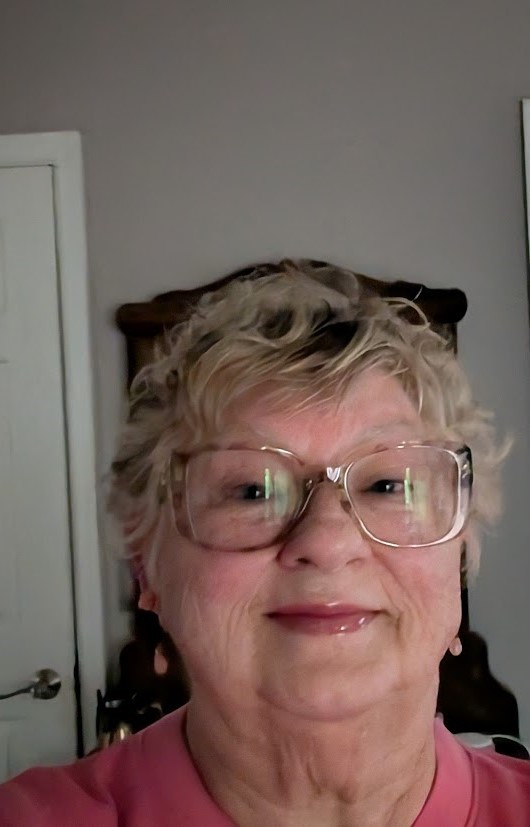
I’ve started blowing my hair straight.

I’ve gone to my jewelry armoire and taken out pieces that meant something to Mom. I have my great-great-grandmother’s wedding band, a tiny little yellow gold band with inset diamond chips, two of them missing, and Mom’s original engagement ring and band. My oldest great-niece wears her upgraded set from the 70’s. Mom’s eternity band fits my right hand. I wear it sometimes. I hold her gold bracelets in my hand to warm them. I can’t wear them until the clasps are repaired.

Most of Mom’s never-ending collection of costume jewelry was sold in the estate sale after I removed a few pieces and sets that I remembered from childhood, things that she continued to wear until her passing. A blue and light blue rhinestone brooch and earrings set, another with settings of various hues of gold, and her Christmas brooches are safely tucked away.

I have some of her dreamcatchers in the kitchen window, and I’m thinking about hanging the rest of them. She strung them in the apartment windows and on the arms of her Rollator, Dolly.

I often shower with Mom’s favorite fragrance, Pure Grace by Philosophy, which our dear friend Neil gave her for Christmas in 2019. Sometimes, I spritz with the half-bottle left of her Pure Grace body spray.

She dressed in coordinating pants and feminine tops, and when there was a special event, she made a spectacular new dress. She chose jewelry to match the outfit, whether she was dressed for a day at home or a special event. She looked terrific in royal blue. I’ve been wearing blue a lot lately.

I told my nail technician how Mom’s nails were so beautiful and that she even did them herself until her last year or so.
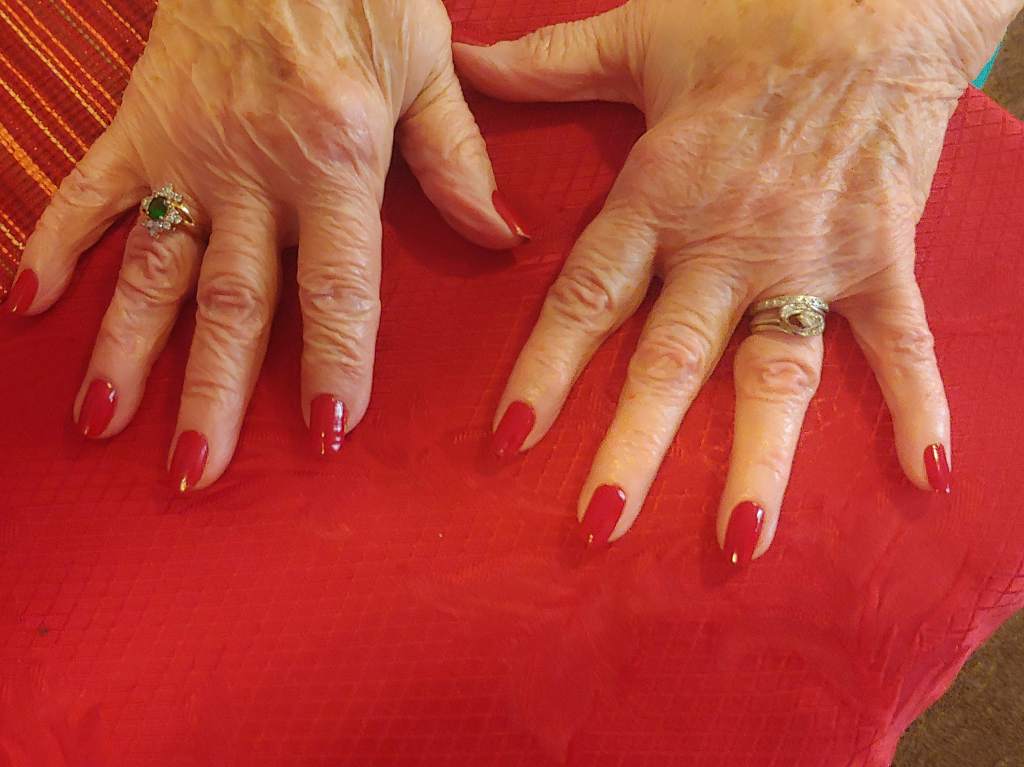
Then we discussed how the older ladies knew how to dress, apply makeup, and accessorize themselves with jewelry, even when they were only getting their toes done. I told her how Mom would get up every morning, do her hair and makeup, choosing which red lipstick to wear that day. She was never without red lipstick. Oh, she tried deep coral and fuschia and all shades in between, but Revlon Red was her standard.

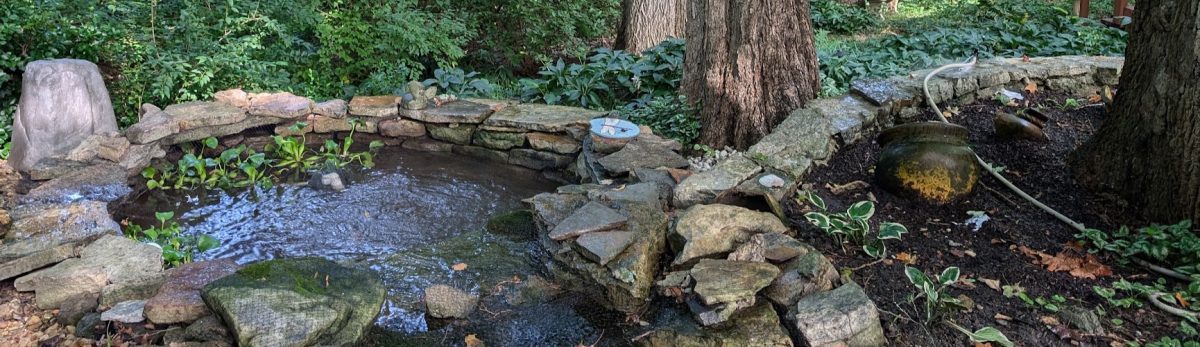
Mom had the most magnificent walking stick that she used before she had her knee surgery. I can’t remember where she got it, but I do remember that she told me. It was handmade by some man in Gainesville, I think, or maybe it was Cookeville. I don’t know where that treasure is, but I think of Mom every time I grab some sort of stick to walk the rock path downhill to my fish pond.

I think of Mom every time I see trout on a restaurant menu. She always ordered fish. I try to cook green beans like Mom’s, but they don’t taste the same. Mom made a banana cake every year for Christmas. She even baked one for my son Jade’s birthday. I’ve made banana cake, but not like Mom’s, using a recipe from my dad’s mother, Effie Blair. Mom’s actually tasted like Mammy Blair’s, and that was a hard thing to accomplish. I may try to bake one again.

Mama loved to sing and play the piano. She thought she and I sounded great together. I’d be the soprano, and she the alto. After years of asthma and inhalers, I am now the alto. I have never parted with a music box my mom bought for me, so I have an extensive collection. The one I wind most often is the one that plays Wind Beneath My Wings.
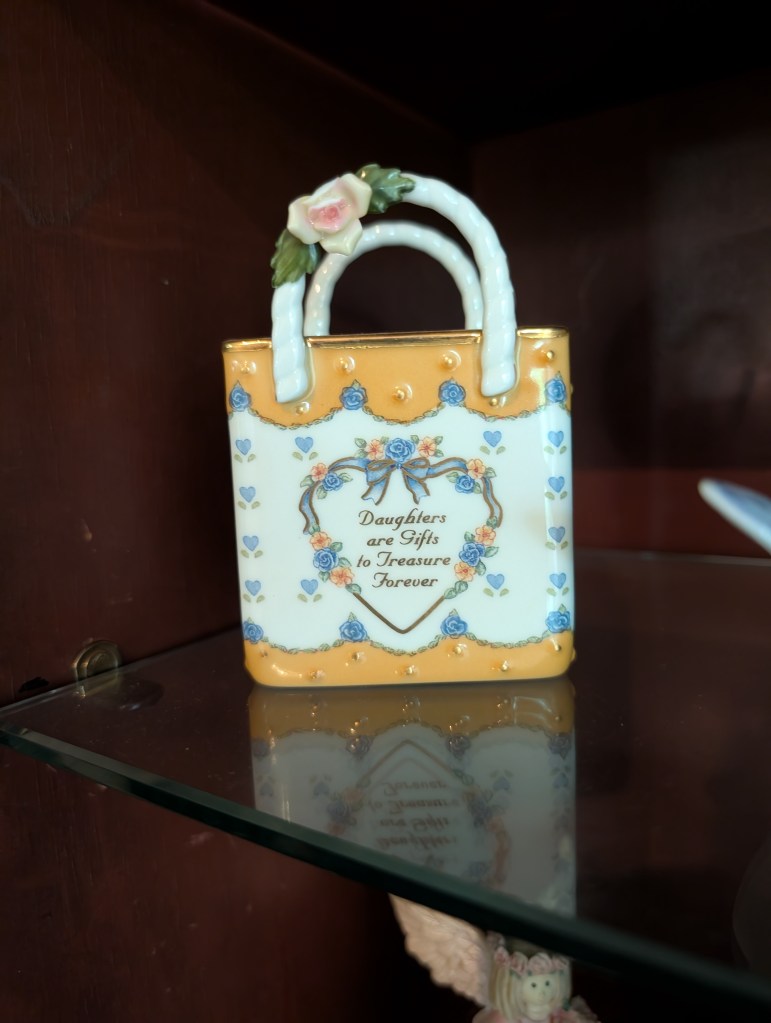
Mom was always so proud of me. If I sang at an event, she was there to quietly cheer me on. I played the lead, Sgt. Sarah Brown, in our high school’s production of Guys and Dolls. Mom and Dad had moved to Billings, Montana, to shepherd an old Baptist Church there. I tried to talk Mom and Dad into coming for the production, but they said they could only afford to go once and that they intended to be there for graduation. I wish I had insisted they come for Guys and Dolls.

I did so many things that Mom didn’t get a chance to do. She married at fourteen (almost fifteen) and gave birth to my brother Denny a year later at fifteen (nearly sixteen). She was eighteen when I was born. Her whole life was given freely to support Dad, facilitate his goals, and encourage him. She was somewhat militant in her role, especially as a pastor’s wife. She was never sorry for her early start, but she told me once she missed having girlfriends like I did.

Mom’s best girlfriend after she and Dad moved back to Tennessee was my Aunt Bessie, Dad’s youngest sister, nine years Mom’s junior. They talked every Saturday morning, sometimes for hours. My Aunt Bessie started to decline in the months after Mom was gone and died soon after. Things just weren’t the same.

She did not neglect her education. She had graduated from 8th grade at thirteen, and when Mom and Dad married, she taught him to read. When he attended high school at Harrison-Chilhowee, she helped him with his homework. She studied and passed her GED exam. She studied alongside him at Tennessee Tech, Cumberland, and Belmont colleges. Meanwhile, she enrolled in night business classes, taking Denny or me with her, whichever one was available. Her first office job was at an insurance company in San Francisco. She commuted across the Golden Gate Bridge from Mill Valley, where we first lived, and later worked in several Sears locations in the West.

And when Denny and I were both out of the house, she owned her own business.

She was always an avid reader and kept up with news and current issues. I loaded up her Kindle with romances and literary novels. And God love her, she kept a diary.

I believe I was Mom’s best friend. I think she loved me more than she loved herself. But I never had a one-on-one relationship with her until my father died. She became my most vocal supporter, my most learned elder, and a girlfriend who loved to go on drives to pick up items I’d bought on Marketplace. Oh, the places we would go!

And the laughter. Every day, we found something to cause us to bend over, wipe joyful tears, or pee. Mom wore Depends, but there were times I didn’t make it to the bathroom.

I don’t wear red and don’t want to look like Mom. In personality, I have never been like Mom; I have always been much more like my daddy. Maybe it took us a while to bond one-on-one. And now I’m somehow empty without her next door.

Maybe you miss your mama, too.

***

Years ago, I was the assisting minister on Mother’s Day and wrote this prayer.

Father, we praise you on this special observance of Mother’s Day. We thank you for showing us your creative, nurturing, loving side, which we naturally associate with motherhood. We are reminded that while you do seem to bless our mothers abundantly with those special gifts, you offer those same gifts to all as we learn to live by your example. 

We give you thanks for our mothers, and we know that the unconditional love they give us could only come from you. We ask your special watch over those soon-to-be mothers, and we beg your healing and comfort for those who struggle to conceive. We invite your wisdom and reconciliation for those who find themselves with children and aren’t truly ready to be mothers;  in your wisdom, bring them to a true soul-blessing through whatever path you design. We are grateful for adopting mothers. We thank you for “stand-in” mothers, the ones who are just like mothers to us. We pray for your guidance for mothers in difficult situations, and we ask for consolation for those who have lost their mothers, whether through death or separation. 

All these things we ask in your name,

Amen.

Grafting and Healing Gahhhh

Maybe forgetfulness is part of healing. I know it’s related to grief.

I didn’t remember Mom on June 24, the day she died two years ago, but I had a restless, sad week. I thought I was anxious about the debate between, you know, Him and Him.

The debate passed, and I was a bit nonplussed by the performance of both Hims. Good Lord. However, after that day, I was still uneasy and lethargic.

Friday, I went to the nail salon so Wii could put that powder stuff on my nails. I’m growing nails out under those shells, and I think this week will be my chance to go au naturale. I’m going to the salon where I took Dad three weeks before he died and Mom three weeks before she passed. It took me almost two years to get back there. I just went anywhere I hadn’t been with Mom or Dad.

When Wii began to speak, it came to me. June 24 had come and gone, and I hadn’t remembered that Mom died on that day two years ago. I grieved for a few minutes. I was surprised that the date hadn’t come to me. I think about her almost daily. But it had arrived in the form of almost a week of depression. My condition is better named Sorrow.

The body and the mind managed the grief. After the week had passed, I felt a small healing, and now I can laugh at some of the predicaments Mom and I got into. There were so many.

I’d started this blog piece three weeks ago, and now I felt I could write.

***

In April, my dentist and I decided I might need a gum graft. This is where the surgeon excises live gum tissue from somewhere in somebody’s mouth and then “plants” it in receding gums. It’s not a delightful procedure, but I endured it well with the help of whatever stuff they used to sedate me.

After the first look at my lower front teeth post-surgery, the doctor told me that after the new gum tissue had settled in, I might also need a frenectomy. Another dental surgery, whereby the little thing that holds the bottom lip to the gums is clipped. Yay for me.

I said, “Goody.” This procedure is scheduled for July 24.

I had a frenectomy when I was nineteen years old, living in Lewistown, Montana, with my folks, working for radio station KXLO. My dentist was Dr. Harry Ziolowski, known to most of us as Dr. Z, a man who weighed at least 400 pounds. I liked him but wondered how he could get close enough to work on my teeth. He always attended to my mouth with gentleness and efficiency. And he was funny.

The day Dr. Ziolowski clipped the frenum, I drove myself to the office. He numbed me up, and it didn’t take long. Dr. Z had just received a new kind of bandage for such a task. He explained that this material would feel like three big pieces of bubblegum inside my lower lip. He pressed it to the double incision and told me to pretend I had a wad of chew in there.

I tried to laugh, but he stopped me.

“No, don’t laugh. You can’t pull on that bandage. It’s supposed to settle in against where I did the work.”

Dr. Z had already prescribed some painkillers, and I had picked them up before the appointment. I headed to the restroom to clean up my bloody face and popped two of them before I drove home.

I was drowsy, but I knew Mom had not been feeling well when she went to work, so I fixed the Littles hot dogs, canned chili, and potatoes. Our Littles were the three Wong boys that we were fostering. They were happy to eat as soon as they came in from school.

“What in the world is wrong with your mouth?” Johnny Wong, the youngest at age nine, asked.

“Had surrrrzhy,” I said.

“What’s surrrzhy?” Jerry asked.

Johnny answered in a low tone, “They cut something out.”

“Her tongue?” Jerry asked.

Johnny huffed. “No, probably a tooth.”

I didn’t bother to correct him. I just wanted to get that bottle of ketchup on the table and make it to my bed. The numbing was wearing off.

Jimmy didn’t acknowledge his brothers’ conversation. He just said, “Good, Dinah,” as he pushed a large piece of chili-laced hot dog into his mouth.

“Oo eyes puh disses in dihwahher,” I said, turning toward the hall to my room.

I didn’t hear Mom come in. My mother was plagued with migraines, and I knew the worst of this one was on its way when she left for the bank. She was seeing an aura. I assumed she would go to bed early after talking to the boys and saying goodnight. She always read to them, but maybe not that evening, and Dad was away from home for some educational reason. She did go to bed, I found out.

At about midnight, I woke in terror with a giant bubble still attached to my mouth but lying on my pillow. I screamed and jumped away from the bed. Blood from this melon-sized balloon spattered over the whole room, pink bedspread, white ruffled pillows, and the walls. I grabbed a pillow and held it against my face. Mom was in front of the bathroom by the time I got there.

“What’s wrong? What’s happened?” she asked.

“I tink my buhbuhguh boke,” I answered, muffled by the pillow.

“Good grief. I don’t know what you’re saying, but we better call Dr. Z. And go get a towel.”

I grabbed a green hand towel from the bathroom and left the pillow in the tub, then weaved and wobbled back to Mom’s bedroom, helped her lie down with the princess phone, and propped two pillows behind her back. I was right. She was in the middle of a migraine.

I could hear the phone ringing.

“No answer,” she said. She hung up. She dialed again. It rang and rang, and finally, Dr. Z answered.

“This is Ethel Blair,” she told him. “Something’s wrong with Diana’s mouth. There’s blood everywhere.”

“Okay. Okay,” he said, half asleep. “Meet me at the office.”

“Alright,” she said to him and to me, “Honey, put some clothes on.”

I grabbed a yellow sweatshirt and a pair of wheat-colored jeans from the chair where I’d left them and staggered down the hall and through the kitchen to the garage. I jumped when I realized Mom was behind me. She was wearing her bank uniform skirt, a blue chenille cotton robe tied around her waist over her pajama top, and red fuzzy house slippers.

“You on’t hah tuh doh wif me, Ma,” I said. “You toh tick.”

“I’m in better shape than you are. Get in the car.”

I was in my seat by the time she made it to the driver’s side, holding onto our co-owned sixty-six Mustang. She backed out of the garage and handed me a brown grocery bag.

“Here, hold that in case I vomit,” she said.

We knew we’d probably make it to the doctor’s office before he did, as he and his family lived farther out of town.

We sat in the car in the dark. Mom held onto the steering wheel. After a few minutes, she said, “He’s not coming. I bet he fell asleep.”

There was a phone booth between Dr. Z’s place and the Dairy Dip.

“I doh cah him,” I said. “Do oo how caynzh? Doh hab pursss.”

Mom grabbed the paper bag and heaved. She leaned back against the seat, sighed, and said, “While you do that, I’ll throw this away.” Then she handed me her purse. I lifted her wallet and was glad to see she had a zippered pouch full of coins. I took it with me as I made my drunken way to the phone booth.

I knew his phone number. I dialed.

“Ethel? Is that you?” he asked.

“Dr. Z, ‘s Dinah. Dat baddash bust.”

“Oh no,” he answered. “I thought I was dreaming when your mom called. I’ll be there as soon as I can. I’m sorry.”

“‘Tay,” I said.

Mom had driven across the parking lot to the Dairy Dip. She was hurling into their big garbage can.

“Ma!” I called. “I tumih.”

I was beginning to gain control of myself, although I’m sure I staggered a little across the lot to the Dairy Dip trash can. I held Mom. She turned and said she thought she was feeling a little better.

“Oo dit ih duh sigh, an I dwibe,” I said. I pushed her into the passenger seat and rounded the Mustang, balancing myself against the vehicle with my left side.

She looked comfortable in the car. “Is he coming?” she asked.

I nodded my head.

“I’ll just stay here,” she said.

I drove slowly over a couple of bumps between the lots and parked as close to the door as I could.

“Whah if oo bahf?” I looked in the back seat. Nothing there to throw up in. I got out and opened the trunk. There was one of Dad’s leather book bags. It was sturdy. I emptied the books, papers, pens, paper clips, and whatever else was in the bag. I handed the bag to Mom and saw Dr. Z’s big truck with its bed cover-camper shell coming down the road.

I leaned against the car and waited for him to park and get out. He was wearing yellow and brown striped cotton pajamas, a matching plaid robe, and a bowler hat.

“Oh, Diana, I’m so sorry. Come on in here. Where’s Ethel?”

“Ih duh cah,” I said. “Siht. My-way.”

“Oh, gosh, I remember she gets migraines. Let me get her out of this car.”

He ran to the vehicle and opened the door.

“Ethel,” he said, “You can’t stay out here in the dark. Let me help you inside, and I can give you something to calm this old headache. “

Never mind me, I thought, moving the towel to a dry place.

Mom held his forearm with both arms, Dad’s book bag dangling from her left, as he carefully ushered her up the steps to the door. I held the wrought iron banister, glad to be a bit more with it than an hour ago.

“Diana, go on back,” Dr. Z said as he turned on the hall lights with his right hand and held onto Mom with his left. “Ethel, can you curl up on this sofa? I can give you a shot of Valium. I think it would help.”

Mom nodded. The sofa was a red velvet Victorian loveseat. It looked odd compared to the rest of the chairs in the room. Mom scrunched her knees up on the sofa as Dr. Z pushed her into place. She looked like she belonged on the short couch.

“I’m going to give your mother something for that headache,” he said, rambling around in the hall closet.

I climbed into the dental chair in the back room. It was dark.

I heard Dr. Z say, “Ethel, I’m going to pull your sleeve up. I normally give Valium in the buttocks, but I’d have to move you.”

Footsteps in the hall.

Dr. Z turned on the task light. I was nearly blinded.

“Where’s Rev. Blair?” he asked me as he prepared a tray.

“Pihwins,” I said through clenched teeth.

“Ah, Billings. I bet he’s at the State Teachers’ Conference. I thought it might be in Great Falls this year.”

“Es,” I answered. “Oo dib Ma sot?” I wrapped the white towel he gave me over my chest and under my chin. still holding the bloody towel against my mouth.

“Yes,” he said, “She should be feeling better in a few minutes. Okay, now, open up. Just a little. “

I opened my mouth and pulled down my lower lip.

“Oh my God, this is a mess,” he said. “That stuff…It’s not supposed to do THAT.”

He paused for a minute or two.

“After I numb you up, I’ll pull this bandage out and temporarily replace it with a stack of gauze. Then I’ll get you to hold it. You can be my assistant.”

“Here comes the numbing,” he said as he pushed the needle into several points on my lower gums. I remember seeing stars alternating with pitch black.

“Now, while that’s setting up, I’ll get that stuff out of there. Open just a little more.”

He lifted some instruments from the tray and started gently pulling on the rubbery mess. I held the gauze against my cheek.

“Okay, it’s almost out. Give me the gauze.”

He pressed it between my lips and my gums. “Hold that pretty tight,” he said. This was a bigger wad than the bubblegum.

“Oh, good lord,” he said, dumping the messy lump from his other hand onto a stack of paper bibs, which he carried to the waste can in the hall, along with my bath towel.

Blood ran from my mouth and filled the gauze. I kept holding. He gave me a second stack and left the first on the tray.

On his way back into the room, Dr. Z said, “Diana, I may have to cauterize this thing. You just keep holding for a minute.”

He went into a storage room across the hall and started grabbing equipment.

I didn’t care. I just wanted the whole thing over with.

I heard a thud closely followed by, “Oh, no, Ethel.”

I jumped from the chair, still holding the gauze, and followed Dr. Z.

Mom was on the floor, and this big man was going to try to put her back on the sofa.

“No, no,” I yelled. “Eeb huh oh tuh foohr.”

I rushed around the two of them, pulled a cushion out of a side chair, and pushed it under her head.

“You get back in there, young lady,” he said. “You’re going to cause that mouth to bleed.”

Like it’s not already bleeding, I thought.

He was back in the closet in a couple of moments, and called out to me, “I’m getting her a blanket and a towel in case she vomits.”

“See otay?” I asked.

“She’s good. She’s just sleeping.”

That’s what they say when somebody dies, I thought, and I got up and down the hall again.

“Mom, Mom,” I said, leaning over her on my knees. “Tan oo heeh me?”

“Yes, Honey,” she mumbled. “I hear you. I’m okay.” She put her forearm over her eyes.

Dr. Z. pulled me up and said, “Come on, let’s go.”

He followed me to the exam room. I climbed back into the chair.

“Leaning you back,” he said. “I’m going to stop that bleeding now.”

“I’m going to put this over your face,” he said, “and then you just let me lift your lip off the place, and it will only take a minute.”

Something heavy lay across the top half of my head.  Dr. Z. pulled my bottom lip out and started to remove the heavy gauze. I instinctively put my hand to my chin, thinking I would help him, I guess.

“No, no,” he shouted. “Get your hand back!”

I immediately heard a small sizzling. Then the smell hit me.

“Uhhhhhhgg,” I said and shivered.

“One more time,” he said as he touched the wound again. It did not hurt, but I heard it, and I smelled it.

“I doh be siht,” I said and wretched.

Dr. Z. fanned me with something, probably a magazine, and said quietly, “One last small one, and we’re done.”

He probed the third time and fanned me again.

“Wait, wait, wait just a minute.”

I did…wait. And then I threw up. All the blood I’d swallowed all night, and for all I knew, all my insides.

Dr. Z. helped me out of the chair. I stepped into the bathroom. I’d wet my bloodied jeans, and my yellow sweatshirt was a sickly-looking brown. There was blood in my hair and on my white tenny-runners that would never come clean.

“Diana,” he called. “You may want to shower yourself off before you go home. Is there anyone that can pick you up?”

“I tan dwibe,” I said. “I doh hab kwobes.” I hadn’t known there was a shower.

“You can wrap up in my bathrobe. It’s still clean.”

I opened the door. He was a mess, standing there holding out his bathrobe. “I’m going to throw your towel away. Is that alright?”

“Es.”

“How about your clothes?”

“No. I hab to tate dem ho.” Even in my sad condition, I wanted to save my favorite jeans and sweatshirt.

“I’ll find a bag or something,” he said.

“I nee tet oh Ma,” I said.

“I just did. She’s fine. Get yourself cleaned up a little.” He opened the door to his office and led me to his personal bathroom in the corner.

How about that? I thought. Corner bathroom with a corner shower.

“All I got is Lifebuoy. There’s a towel and face cloth on the sink,” he said. “Leave your clothes in the shower,” he said. “You can get the mess tomorrow.”

“Now,” he said, “I’m going to close my office door, and you can lock the bathroom door if you want.”

I closed the door, locked it, and turned the water on in the shower. I pulled the sticky sweatshirt over my head and unzipped the jeans. I decided to rinse them out. It took me longer to give the clothes a bath than my shower. I wondered what LifeBuoy hair would look like in the morning.

It took both Dr. Z and me to get Mom in the car. She was fairly limp.

“You sure you’re okay to drive?” he asked.

“Es,” I said. (I had a big gauze wad in my mouth.)

When we pulled into the garage, I realized I was not okay to get Mom into the house by myself. I was uncomfortable waking a neighbor at that hour of the morning. I leaned her seat back as far as it would go and went into the house to get blankets. She wouldn’t need a pillow, but I would.

The boys were all sound asleep.

I tucked a red bedspread around Mom, scrunched up in the back seat, and pulled a blanket over myself, still in Dr. Z’s bathrobe. I hope those boys set their alarm, I thought. I smelled Lifebuoy soap.  

***

***

Grief Goes to Granville

Mama died in her sleep a year and four days ago. June 24 is the date. I had not cried except when I was lying on the couch with the flu this spring and heard Bocelli singing Amazing Grace in front of the Vatican. The weeping was over when the music stopped, and I returned to my coughing, headache, and sore joints.

I knew the trip to Granville’s Heritage Days on Memorial Day weekend would come near to killing me. Tears welled up when I opened the invitation to the annual memorial service for all the people who were attached to Granville in some way. All these people passed away since the last Heritage Days service. She was fourth on the list, Ethel Blair, just below Barlow, Barrett, and Birdwell. There was also a handwritten note in the bottom corner announcing that a brick would be dedicated in Mom’s honor on the museum’s Memory Lane.

It hit me that Mom was no longer real. She had spun herself into a memory. Had she floated away from my reality? I was about to face the place where Mom and Dad served a community in their older years. Dad was the pastor there, and Mom played the piano.

Since last June, grief hasn’t been hidden, but we’ve been trying to sell our beloved Compound On the Ravine, a place that requires a particular buyer with a situation similar to ours.

We bought a new home, The Cottage, and the moving and the paring down proved unmerciful. We fell for the idea of an estate sale, a disastrous experience that left us with more of a mess than we started with. One friend and I emptied garages that could fit six, maybe eight, vehicles.

The upkeep of The Compound has taken a lot of time and energy. We contracted Covid, then the flu came for a long seven-day visit. In winter, spring, and summer, we’ve made almost daily trips to The Compound. It hasn’t sold yet. Besides that, we have been trying to make The Cottage our new home.

Grief is adaptable. If it couldn’t move in with me, it would devastate others around me. While I was busy with Mom’s last days, my cousin Reba lost her husband Lewis. What a sweet couple. My Aunt Bessie died March 23, nine months to the day after Mom. Her kids say she just wasn’t the same after Mom died. Ethel and Bessie talked every Saturday, sometimes for two or three hours. My cousin Brenda Gail died within a month. Her mother was Aunt Elois, my dad’s oldest sister, long gone now. My writing group friend Debbie’s sister passed away in Alabama, and just a few days later, Bonnie, another of our group of 5 Ladies in Writing, suddenly lost her husband. I’d visited her at the St. Thomas Hospital cafeteria just days before. After that, the husband of my dear ex-sister-in-law Vickie in Montana surrendered abruptly to just-discovered cancer.

And then, one day, about two weeks into May, the servicemen came to check out our HVAC at The Cottage, just as they had always done at The Compound twice a year. George finished before his partner and was leaning against the white truck when I came out the front door. I don’t remember where I was going nor who came with George that day.

George might be sixty or maybe a little over. I said, “How’re you doing, George?”

He said, “Fine,” and quickly added, “Probably as fine as I’ll ever get.”

“What’s wrong?” I asked.

“Well, I lost my wife in a car accident a month ago.”

“Oh, George, I am so sorry,” I said.

“It was a one-car accident,” he said. “Day before her birthday. She’d gone to get her toes done. It was her birthday present. I guess she just lost control of the car. She would have been home in less than ten minutes.”

“Where did that happen?” I asked.

“Tater Peeler Road, out from Lebanon. Kinda out in the country is where we live.”

“I know Tater Peeler Road. I lived in Lebanon for several years. And we had a farm before that in Norene.”

“Well, we was close neighbors. I’m towards the end of the road there at Cedars of Lebanon. She was a wonderful person, always helping somebody. She loved flowers, gardening, you know. She had back surgery one time. We went to the grocery store, couldn’t have been more than a week after, and she was waiting in the car for me to get everything. I got in the car and she saw this elderly couple having trouble loading their groceries, and she got out of that car and went and helped them. Always doing something like that. Yeah, she was getting her toes done. She loved to dress up and keep herself pretty. Loved jewelry. I was always getting her some jewelry of some kind.”

I smiled and he went on. “I don’t stay at the house. I go there to sleep and then I get up and go to work. Put myself on call every weekend so I work every day.”

“So you eat out?”I asked. “You just don’t want to be there.”

He shook his head. “Naw. She was a good cook. Sometimes we ate out. It was always for something special.”

The other serviceman came around the corner of the house.

George lifted his ballcap and put it back on. “I guess we’re ready to go,” he said.

“George, I’ll remember you in my prayers. What was your wife’s name?”

“Diane. Her name was Diane.”

I was so moved that I wanted to see a photo. I looked at the obituaries for Lebanon, Tennessee, and found a picture. I imagined what it was like for George to lose his Diane.

***

Spring hit and there have been several lookers at our old house and a few offers, but no sale. The gardens grew at both homes, but I took a break to make that trip to Granville for the memorial service and the dedication of the brick. Dave remained at home with Dixie, and my friend D went with me.

We had plenty of time but arrived in Granville with only a few minutes to spare before the brick dedication. D dropped me off and went to find a parking spot. The dedication was brief. I walked down the street to Granville United Methodist Church, and, instead of taking the steep steps to the double doors, I made my way up the ramp on the side of the church through the pastor’s office to the choir room and restrooms.

I sat on the end of the pew with the large aisle from the choir room. There was the familiar cube of tissues. I knew I’d need them. A woman from the middle of the seat leaned over to tell me she had family coming to sit there.

No bother. I moved forward to the center aisle seat on the second pew, checked for Kleenex, and grabbed a handful.

Something swirled in the center of my body. It spread to the very edge of my neck, shoulders, and legs. All that I could relate to were arms and legs. The twisting in my middle had created a large hole, empty except for the rotating air. I started to cry. Not just a little, but sobbing, and holding two or three tissues to my mouth.

D will be here soon, I thought, but as the pastor started the service, I sat alone in that respectful silence and felt the stark nothingness of grief. I must have walked on someone else’s wobbling legs to the altar and lit a candle when Mom’s name was called.

Caregiving. Sad.

I am weepy today, and I’m not sure why. There was a power outage last night for a couple of hours. Trying to get air from my c-pap machine woke me in the pitch black at midnight. I was reminded of old dreams of the dark.

I moved slowly to the bathroom just in case something might trip me. “Shower day,” I thought. “Today is Mom’s shower day.”

The alarm sounded at six.

Mom is doing well except for her lack of mobility and searching for words. She asked for something after her shower, but I couldn’t figure out what it was. She said, “I want my …” and I said, “What, Mom, what do you want?” She answered, “I want my …” two times more after the first. One time I said, “Lotion? Do you want more lotion?” She shook her head. “Do you want a different top?” She didn’t answer and didn’t pose another question. I never found out what she wanted.

After we dried her off, I combed and arranged her hair and applied eye shadow and eyebrow pencil. She wanted to do her own lipstick.

She headed for her chair in the den while I got her morning pills and Gatorade and freshened her water bottle. I gathered all the towels, the pad from her bed, nightgown, and hospital socks, took them to the washer, threw in the detergent pod, and set the load for Small so the water and additions would all get mixed together quickly. Then I added the clothes. “I want my…” I said to myself.

Later, we sat together in the den. After coffee, she sipped water from her purple container (We always try to match her outfit of the day) and I drank a Diet Coke. “Do we have any…” she asked. When she can’t find the word, she clasps her fingers and thumb together over and over. She told me that my step-grandmother made that particular motion after her stroke. Her name was Ethel, too, and she’d been married to my mother’s father for sixty-plus years. She was more like family than my real grandmother who died of lung and liver cancer in California a few years ago. Granny Ethel couldn’t ask a question, though. She just said, “Gimmee, gimmee, gimmee,” and made that clasping gesture.

Mom pointed to my Coke again and asked, “Do we have any…” and I said, “Coke?” She shook her head no and I asked, “Iced tea? I just made some fresh tea.”

“No-ooo. Oh, you know…”

I didn’t.

“I drink it,” she said.

“Root beer!”

She was nodding her head. “Yes, yes, yes. Root beer.”

“You have plenty in your supply closet. I’ll put some in the refrigerator, okay?”

I left for the kitchen and forgot why I went before I got there. It always helps to bend over the sink with my head in my hands. If that doesn’t work, I have to retrace my steps.

Ah, root beer. In the closet.

As I finished placing the last of the six-pack, it occurred to me to ask, “Do you want root beer now?”

“Yes, I just want to drink a little root beer now.”

“Here you go,” I said as I set the bubbling glass on the table beside her chair. “Now I’m going downstairs for a bit. I’ll be back to get your lunch.”

“I’m not hungry now.”

“I know. I’ll be back when you get hungry.”

It was 11:50 when I closed the elevator door and pressed Down.

I asked myself, “What is this sadness?”

A friend sent a funny, funny video in a message and I laughed like crazy! It made me think to look on Facebook for some inspiration or another chuckle. I started to write this piece for my blog and thought to change the cover photo. I never know how to do anything in WordPress. It’s always several trials and even more errors.

Media. I needed to go to media to see which photo to use to capture the reader’s attention and give them some kind of insight into my theme. In those pictures, I saw the story of our ten years here on the ravine.

When we first moved here, we had a large skulk of foxes. We watched them with delight for two years, and then they moved on. I retired and lost the years and years of friendships I’d cultivated at work. One deep friendship gave way to the new distance between us. I left church–and relinquished a community. Mom and Dad stopped attending their church and that peripheral group was gone.

We have no more grandBABIES…The oldest one is 18 now, the youngest 6. That happened all too quickly. No more Grammy Days, or rides in GrammyVan, or the little liars telling convincing fictional stories tricking us into believing that they were reality.

Dave’s closest friends have passed away since we moved here, and the Corner Pub, the afternoon gathering spot for them closed. Murphy, our fifteen-year-old Shih-tzu, crossed over the Rainbow Bridge.

Dad died. I almost lost myself.

Mom is sliding away. She tries to be present. I’m still her baby. She’s still funny at times and we laugh and laugh. But I know she’s going. I feel her leaving.

Last week, Neil, the one I called our semi-permanent houseguest, moved on. As frustrated as I could sometimes get, I miss him.

I don’t grieve for the older losses like I did when they first happened. I feel community and warmth from a group of fantastic women in my book club and in my writing group.

There’s a bunch of birds at our feeders. One little house finch lives in the eaves of Mom’s porch and greets me almost every morning.

Dixie, our three-year-old rip-roaring personality in a mix of Shih-Tzu and Poodle, is a gift of affection and loyalty. Maybe she’ll be around twelve more years.

Diana (another Diana) moved into The Cellar and brought a delightful breath–no, a light wind–of fresh air.

And Dave still loves me unconditionally. We’ll be married 25 years in April. Those years passed in fast-forward speed, it seems. Something in me wants to ask, “How many more years will we have?”

This isn’t the regular, or normal, depression. I’d recognize that.

This is different. I just get sad.

TomTom is gone.

I have grieved but not nearly as much as my dad. He made friends with the little grey and white kitten the first time TomTom crawled up the bank from the ravine. Dad was working outside and talked to his new friend every day until the cat was no longer afraid of him. Tom might have been six months old, or maybe just four. 2016-05-05-18-15-04

While Dad strolled around the Compound on his morning walk, Tom followed. Every chance he got, he rubbed Dad’s legs, sometimes winding between them to almost trip him. Dad learned to shake him loose. Tom didn’t mind.

One day I asked Dad if he had seen the tomcat that morning.

“Is he a tomcat?” he asked.

“Yes, he is.”

“You can tell?”

“Yes, I see some things that indicate to me that he is definitely a male.”

Dad named him TomTom, one of his favorite names for cats. He bought a little sherpa-lined bed and stuffed it into a protected spot on the apartment porch. Mom included Meow Mix on her grocery list.

TomTom chose Dave next. One morning, after he took the recycling cans to the street, Dave announced that Tom had let him pet him. I’ll admit I was a bit jealous.

“Well,” I said to Dad, “if that cat is going to stay around, I guess we better take him in for shots. And we need to have him neutered.”

I found a good community clinic with reasonable prices and told Dad I would give him Tom’s veterinary visit for his birthday. He was pleased. Tom wasn’t.

I borrowed a hard crate from a friend and set it outside–“so Tom can get used to seeing it.” Tom took off and didn’t appear until three days later when I returned the crate to the garage. We decided Tom had seen a cat-carrier, probably up close, at least once in his lifetime–and wasn’t fond of the experience.

My hairdresser told me she favored a soft-sided case, that it was easy to sort of “stuff the cat in and zip it up fast.” I started to purchase one, but my daughter-in-law said she’d loan me theirs. I figured I’d give Tom’s reluctance a couple weeks to subside.

He wouldn’t sleep in his little bed on Mom and Dad’s porch, so we moved it to the main house’s porch beside the den. He still wouldn’t use the bed, but he curled up almost every night on one of the wicker chair cushions. During the day, he’d walk or sit with Dad, stroll in the gardens, and nap in the sunlight on the bank or in the shade of one of the porches. He drank from a birdbath that I always filled with fresh water. He hunted up and down the ravine, the old home place he returned to at some point every day.

I started a morning-treat ritual with Tom, and he grew to like me. I gave him a small piece of meat or fish, and when I had no leftovers, I pulled out a small container of purchased cat food that I always kept on hand. After the appetizer, he climbed the steps to the apartment steps and finished off his bowl of Meow Mix.

Tom loved to aggravate our little Shih-tzu Murphy by meowing at her through the glass door of the den. She was always willing to growl, yap, and fuss at him. When Dave took her out for her bedtime walk, Tom either followed them down the street, Murphy barking and pulling at her leash until Dave had to pick her up and carry her away from the cat. Or if TomTom was already sleepy, he’d maybe open one eye from the middle of his warm, curled-up self and totally ignore that silly dog.

About the third week into our newly-cemented relationship, Tom began to walk into The Cellar when I’d open the door. He’d make one loop around the small kitchen area and then he was ready to get back outside. He also let me pick him up. He wouldn’t stay long, and he wiggled, but he didn’t really fight it, and he never scratched me.

I figured he was ready for the trip to the vet.  Easy-peasy this time.

I never got him there.

The last time we saw TomTom was right before the New Year, a couple of weeks after I’d sent out the Christmas newsletter where I included this photo of Tom sitting on a rock in the rose garden. It was also just about the same time that the neighborhood coyote sightings began. First, a woman posted that she’d seen a three-legged coyote. Next, another neighbor spotted one. One family came upon three in their back yard.

I put a Missing Cat notice on our neighborhood website. Several friends and neighbors told me, “He’s just tom-catting around. He’ll be back, and when you get him fixed, he’ll stop that.” In my heart, I knew he wouldn’t be found, wouldn’t be back. In my heart, I knew if TomTom could make it home, he would. He wouldn’t give up his morning ritual, he wouldn’t want to sleep anywhere else but the wicker chair, and he would never choose some other entertainment over tormenting Murphy.

It took me several days of missing Tom to put the pieces together, maybe because I didn’t want to. Actually, Dad said it first. “The coyotes got my TomTom.”

My post is still up on the NextDoor website. Last week, a sweet neighbor replied with a list of places to post notices for a lost animal. I wrote that I thought the coyotes got Tom. She replied she was sorry, and that she’d still look for him.

This morning, Dave spotted a coyote between two birch trees on the edge of our ravine. He said it wasn’t the three-legged one, so that meant there are at least two. I told him about the three seen together in the back yard a couple streets over. He hadn’t seen that post.

So here’s what I wrote on my Missing Cat thread this morning:  “I’m going to take this post down tomorrow morning. A coyote was in our back yard just now. Everybody, watch your animals.”


When You Lose

I’ve seen it, a kind of numbness that sets in with a loss. A love that is irreplaceable, someone who was the last ounce of family glue, or the always-there funny-but-deep friend—any one of them creates an uncharted hole for us to sink into, scale the walls, clean up, and fill in. Affirming the good psychological work by Kubler-Ross and private counselors (and despite the efforts of grief groups and the prayers of the faithful), the loss really becomes about the one left behind. The numbness—what to do with the numbness?
Sara Walker died on August 28. Sara Walker, Camden and Scott’s mom, Brian’s wife, Dinah and Michael’s sister. She and Brian were friends of my son John and his wife Vicky. Brian was one of John’s best buds in high school, and Camden and Scott enjoyed play dates with my grandbabies, Jameson and Carly. Sara was Dave’s physical therapist after his shoulder surgery a few years ago and a “rock” to her colleagues at Star Physical Therapy in Brentwood.
A baby girl, Camden and Scott’s sister Anna was stillborn in December, 2010. In early 2011 Sara was diagnosed with Stage IV colon cancer. Doctors did not believe the two events were connected, still don’t. Through this last year and several months, Sara waged a valiant fight against this monstrous destroyer. She exhausted every clinical trial available.
Sara chose to post updates on the Caring Bridge website and she consistently proclaimed that “either way, I win”. She said if she won this battle, she would get to raise her boys and be a wife to Brian; if she lost, she won the final victory and would go home to Heaven where she would hold Anna in her arms and praise God forever.
As of a few minutes ago, Sara’s Caring Bridge site was visited 697,665 times since she began to tell her story. I wonder if that is a record in Caring Bridge history.
I don’t think I ever really thought we’d lose Sara.
Just a few weeks ago, Dave’s friend John Walker died suddenly of a heart attack. John Walker, international banker, father of Scott, husband of Shelley. The name Walker is coincidental. So is the son’s name, Scott. As far as I know, the two Walker families did not know each other.
A close friend said John had recently been diagnosed with a heart problem and was waiting for a second opinion. He was the last person you would ever expect to have a serious health issue. He did all the right things: ate right, played tennis two or three times a week. He was always laughing and joking. With all his exuberance, John seemed to live a low-stress life. Who would have ever thought…
I dreamed of John a few nights ago. He was laughing that big, full laugh and shaking hands and bouncing around the room at the Cross Corner, his sports bar after-work stop where a Celebration of Life packed the place on that Thursday night in July.
At 2:00 p.m. the day before Sara died, I rounded a curve on John Bragg Highway, the place where I start slowing down to turn off the busy four-lane onto the country road that takes me to my weekly meeting with the writing group. It’s a bad spot with no turn lane, just over a little hill, and you have to turn from the faster left lane while doing everything possible to warn the drivers behind you to slow down or pull around.
The minute I crested that rise, I felt the rush of that hormone that floods us when we’re scared. That release of adrenalin occurred almost simultaneously with a violent collision of what turned out to be an SUV and a motorcycle just where I intended to turn. Twenty-foot flames shot into the air as both vehicles caught on fire. My leg shook so hard that I could not drive. I managed to pull back into the right lane to roll onto the highway’s shoulder. Four fellow drivers drove off the road, too, some of them easing to a stop, some skidding and screeching at the site. Car doors flung open and strangers became neighbors before the emergency vehicles arrived.
I sat watching the fire. The ambulance was there but there was nothing to be done by the paramedics but watch. My friend, the host of the writing group, called to ask where I was since she had expected me earlier. She jumped on her scooter to ride down to the intersection while I took the back way to her house. I met the Woodbury Volunteer Fire Department truck not too many minutes before I met her at the end of her lane. Or maybe it was the Readyville Volunteer Fire Department.
When we sat down at the breakfast bar in the kitchen and pulled out the laptops, we learned of the fatality in the collision. Several hours later, the Courier said that a twenty-eight year old man from Woodbury, the driver of the motorcycle, died when he hit the SUV turning off John Bragg Highway. The bike was traveling at high speed from the opposite direction that I drove and it lodged under the bumper of the other vehicle. Both caught immediate fire.
The man’s name was Ray Knox. I didn’t know him but the news said they called him Ray-Ray. The only news source I could find that reported the wreck was the Cannon Courier, the small town Woodbury, Tennessee newspaper. The obituary said he left a son and three daughters, his mother and grandmother, sisters, and a “host of aunts, uncles, cousins and friends.”
These were untimely, unpredictable deaths, all of them. I have not experienced a death of someone so close to me, let alone a sudden one, so I recognize my inadequate empathy. The pit I feel for Sara’s passing is a tiny pin-prick indention compared to that of Brian and the others but, even so, there is this numbness. I can’t imagine who could ever take John’s place or who would feel so adventuresome as to try. There’s a hole. And then there is Ray-Ray, someone I do not know but someone who left a host of mourners and multiple stages of simultaneous grief, people who will never, ever, forget that Monday afternoon when they got the call.
Vice President Joe Biden spoke at Ground Zero on the anniversary of the 9/11 attacks. This is a man who knows the utter shock of a sudden loss, having lost his wife and a baby daughter in a car crash in 1972. His two toddler boys almost died. Biden’s empathy allowed him to speak a personal truth. “…no matter how many anniversaries you experience, for at least an instant, the terror of that moment returns; the lingering echo of that phone call; that sense of total disbelief that envelops you, where you feel like you’re being sucked into a black hole in the middle of your chest.”
I’ve tried to write this story since way before 9/11. I couldn’t find a way to close. Now it comes to me that the reason I could not find an ending is that there really isn’t one.
My sorrow for Sarah, John, and Ray-Ray seems like grief-by-association, a feeling that is both instant and lingering, close and yet far away, vague but piercing. I see that, because we have this marvelous capacity for life and love, we are all on the trajectory of losing or being lost. We wept this year for Mary, Dave’s mother. She was ninety-two but we wanted more time with her; we miss her. My mother and father, who are so vibrant, have the predictable battles with the illnesses of aging. I’ve had over sixty years with them, but I don’t see any trade-off in the works of their long lives for less grief. I try not to think that Dave might someday leave me, or that I might die leaving him to deal with the same grief that I fear for myself.
So when I acknowledge that I will lose, I keep coming back to “What will I do with the hole? How will I treat the numbness?”
Tuesday night, author Anne Lamott spoke at Tennessee Tech University in Cookeville. Anne Lamott seems like an old friend, one with wisdom I’ve relied upon, humor I’ve adopted, and faith that makes me wonder. My friend Leslie, an equal fan of Anne’s, picked me up for the hour-and-a-half ride. Since Leslie lives in Huntsville now, we catch up in spurts when she comes to Nashville. We talked all the way to Cookeville, and all the way back. We discussed health issues, aging parents, and loss. We didn’t talk about the “fear” of loss, but it was on my mind.
While we sat in the second row of the big auditorium and Anne told a poignant story about a recent date-gone-badly, I remembered something she wrote about dying, about losing somebody who is your world.
“You will lose someone you can’t live without, and your heart will be badly broken, and the bad news is that you never completely get over the loss of your beloved. But this is also the good news. They live forever in your broken heart that doesn’t seal back up. And you come through. It’s like having a broken leg that never heals perfectly—that still hurts when the weather gets cold, but you learn to dance with the limp.”
I pray that all the ones who loved Sara and John and Ray-Ray learn to dance. I hope I dance. I hope you dance.